Plagiarism Screening
1. Plagiarism Policy
Edukimia is committed to maintaining academic integrity and ensuring the originality of all manuscripts submitted for publication. The journal does not tolerate plagiarism, including the unauthorized use of another person's words, ideas, research findings, data, or other intellectual contributions without proper acknowledgment of the original source.
Plagiarism may occur through direct copying, inappropriate paraphrasing, insufficient citation, or presenting previously published work as original research. This policy applies to all manuscripts submitted to Edukimia, regardless of the authors' academic background, institutional affiliation, or publication experience.
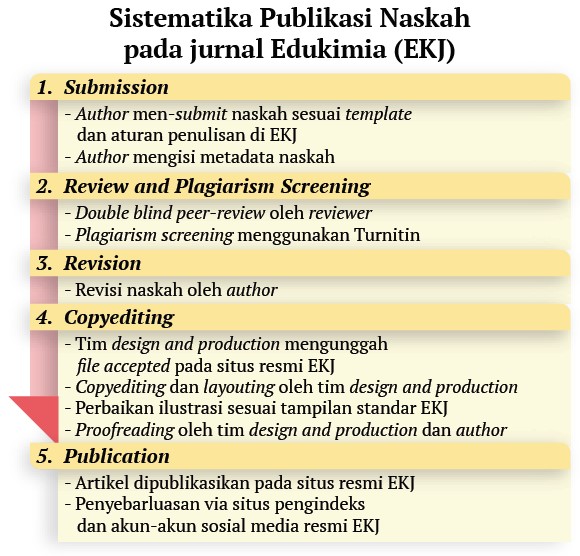
Edukimia uses Turnitin as its similarity-checking software. All submitted manuscripts are subject to similarity screening during the initial editorial assessment. The journal requires a similarity score of 25% or less. However, a similarity score below this threshold does not automatically indicate that a manuscript is free from plagiarism. The editorial team evaluates similarity reports by considering the nature, extent, and context of the identified similarities.
2. Types of Plagiarism
Edukimia recognizes several forms of plagiarism, including:
-
Direct Plagiarism: Reproducing text, sentences, paragraphs, or other materials from previously published sources without appropriate quotation or citation.
-
Paraphrasing Plagiarism: Rewriting another author's ideas or findings without properly acknowledging the original source.
-
Data and Idea Plagiarism: Using research data, findings, concepts, methods, or interpretations developed by other researchers without appropriate attribution.
-
Self-Plagiarism: Reusing substantial portions of one's own previously published work without proper citation, disclosure, or justification.
-
Redundant or Duplicate Publication: Submitting or publishing substantially the same research findings in more than one journal without appropriate disclosure, cross-referencing, or editorial permission.
These forms of plagiarism may occur intentionally or unintentionally. Nevertheless, authors are responsible for ensuring that all sources are appropriately acknowledged and that their manuscripts comply with academic integrity standards.
3. Plagiarism Assessment and Editorial Actions
When potential plagiarism is identified through Turnitin or editorial assessment, the editorial team will examine the similarity report and evaluate the nature and extent of the suspected violation. Editorial decisions will be based on the seriousness of the case, the amount and significance of the material involved, and any explanation provided by the authors.
3.1 Minor Plagiarism
Minor plagiarism refers to limited instances of improperly cited or paraphrased text that do not involve substantial research findings, original ideas, or significant intellectual contributions from another source.
Editorial Action: The authors will be requested to revise the affected sections, provide appropriate citations, and resubmit the corrected manuscript. The editorial team may conduct an additional similarity assessment before proceeding with the review process.
3.2 Intermediate Plagiarism
Intermediate plagiarism involves the unauthorized reproduction or inappropriate use of substantial sentences, paragraphs, research interpretations, or data from another source without proper acknowledgment.
Editorial Action: The manuscript may be rejected following editorial assessment. The authors will be informed of the reasons for the decision and may be requested to provide clarification regarding the identified similarities.
3.3 Severe Plagiarism
Severe plagiarism involves extensive or systematic copying of another author's work, including substantial research findings, datasets, methods, interpretations, figures, or other intellectual contributions. It may also include deliberate misrepresentation of authorship or the originality of research.
Editorial Action: The manuscript will be rejected if severe plagiarism is established. Depending on the circumstances and the findings of the editorial assessment, the journal may notify the authors' affiliated institutions and consider restrictions on future submissions in accordance with its publication ethics policies and applicable procedures.
4. Retraction Policy
Edukimia is committed to maintaining the reliability and integrity of the scholarly record. Published articles may be considered for retraction when substantial evidence indicates that their findings or publication process are seriously compromised.
An article may be retracted under the following circumstances:
-
There is clear evidence that the research findings are unreliable due to research misconduct, including data fabrication or falsification, or serious unintentional errors in data collection, analysis, or interpretation.
-
The article substantially duplicates previously published work without appropriate acknowledgment, disclosure, permission, or justification.
-
The article contains plagiarism involving substantial text, data, ideas, or research findings.
-
The research was conducted or reported in violation of applicable ethical standards.
-
Other serious breaches of publication ethics are identified that undermine the integrity or reliability of the published article.
Retraction decisions will be made following an editorial investigation and consideration of relevant evidence. Authors will ordinarily be given an opportunity to respond to the concerns raised before a final decision is made.
When an article is retracted, Edukimia will publish a retraction notice explaining the reasons for the decision. The original article will remain accessible as part of the scholarly record and will be clearly identified as retracted, except in exceptional circumstances requiring content removal.
The retraction process will follow the principles and recommendations established by the Committee on Publication Ethics (COPE).
For further information, please refer to the COPE Retraction Guidelines.
5. Authors' Responsibilities
Authors are responsible for ensuring that submitted manuscripts represent original scholarly work and that all sources of information, data, ideas, and other intellectual contributions are appropriately acknowledged. Authors must carefully review their manuscripts before submission, avoid redundant publication, and disclose any relevant overlap with previously published or submitted work.
Authors are also expected to cooperate with editorial investigations concerning suspected plagiarism or other forms of publication misconduct. Failure to provide adequate clarification or supporting evidence may affect editorial decisions regarding manuscript acceptance, rejection, correction, or retraction.
Edukimia reserves the right to take appropriate editorial action when violations of academic integrity or publication ethics are identified, in accordance with the journal's policies and recognized ethical publishing standards.
Edukimia has a policy of screening for plagiarism. We use Anti-Plagiarism Software "Turnitin" to check the authenticity article. If the results of manuscript plagiarism checking exceed 25%, then your manuscript will be rejected.